How to make your MTSS more fluid to support students in all tiers
Table of contents
Educators everywhere are facing the same dilemma:
How do we give every student what they need, when the range of skills in a single classroom feels impossibly wide?
In Multi-Tiered System of Supports (MTSS), Tier 1 is designed to serve all students with high-quality, inclusive instruction. When that foundation isn’t solid, everything built on top begins to wobble.
As Dr. Katie Novak, Universal Design for Learning (UDL) expert and author, explains:
“UDL has to be the foundation of a multi-tiered system. It has to be first, best instruction with all students present, and if it’s not, we’re going to be trying to intervention our way out of weak Tier 1. Which is never going to work.”
Clicker is a UDL tool. It helps schools strengthen that “first, best instruction” through Tier 1, and it continues to provide meaningful, scaffolded supports as students move into Tier 2 and Tier 3. Strong intervention is a continuation of strong core instruction.
The real-world tension between idea and possibility
Clicker in small groups: Supporting MTSS without the overwhelm
Theories and frameworks have always been at odds with classroom realities. Educators are told to support students by differentiating. However, the logistics, especially in early literacy, can feel impossible.
You (or your teachers) are juggling wide skill gaps, limited planning time, and curriculum pacing guides that don’t slow down just because your students need more support.
One student is still working on letter sounds. Another is already reading paragraphs. A third needs every word read aloud. And somehow, the expectation is to meet all of those needs simultaneously, without extra hands, time, or tools that make it manageable.
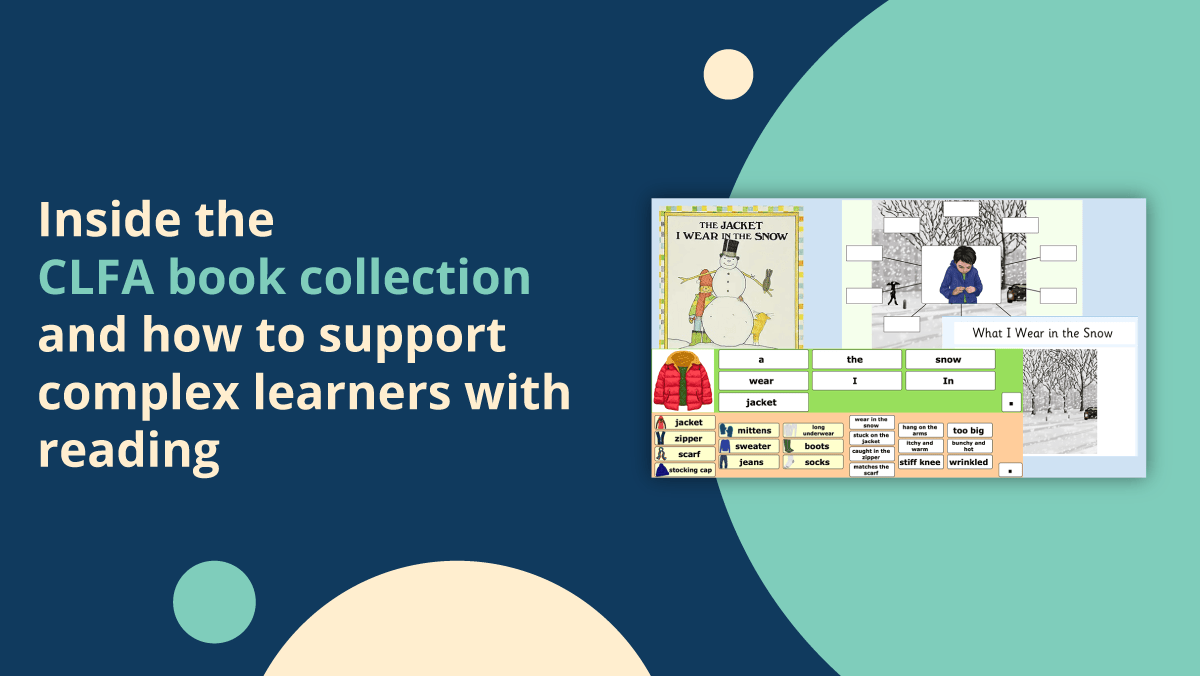
Best practices like differentiation don’t need to be an illusion. Clicker can be used to help students build sentences, engage with phonics-aligned texts, and practice writing in a way that feels accessible and empowering. The tools support their motor needs and their literacy development, without requiring teachers to create an entirely separate curriculum.
It’s a clear example of how MTSS doesn’t need to be work with additional, separate resources. When the right tools are already in place, it simply means better support, which is exactly what the MTSS framework calls for.
MTSS is not a program - it’s a practical way to give kids what they need
If you’ve ever sat in a team meeting wondering what to do next for a student who isn’t making progress, you’ve already felt the need for a better system.
MTSS is that system; it’s a way of organizing how we support students based on real-time data, collaborative decision-making, and instruction that meets student needs. As Dr. Stephanie Stollar put it,
“MTSS is the delivery mechanism for the reading research.”
At its core, MTSS is evidence-based instruction and equity. Most of the time, we look at skill gaps and try to remediate those deficiencies, but as Dr. Sarah Brown explained:
“MTSS is more than just identifying who needs help and giving it.”
Instead, MTSS offers a system-level approach that asks:
- What’s working in Tier 1 instruction?
- Who needs something more?
- And how can we deliver that support in a way that’s strategic, sustainable, and helpful?
Here’s a quick overview of what that looks like in practice:
- Tier 1: Core instruction for all students. This is your main block of classroom teaching, ideally high-quality, universally designed, and accessible to the full range of learners.
- Tier 2: Targeted small-group intervention. For students who need a bit more practice or support in specific areas, delivered a few times per week.
- Tier 3: Intensive, individualized intervention. For students with more significant needs who benefit from additional targeted intervention.
Clicker supports all three tiers, but the most important takeaway here is not that you or your teachers need more tools. You already have plenty at your disposal. Adding more makes for more complexity, and that’s not the goal. The goal of MTSS is to simplify support. And that starts by using the right tools in smarter, more strategic ways.
Supporting students across the 3 tiers of MTSS
One of Clicker’s strengths is its flexibility. It’s not the star of the show; students are. It’s why Clicker doesn’t have to be reserved for one setting, one student group, or one support tier. In many districts, Clicker is used as whole-class support. And, in others, Clicker is a Tier 2 and Tier 3 support.
Here’s how Clicker aligns with the MTSS framework across all three tiers:
Tier 1: Universal instruction
Clicker strengthens Tier 1 by making core instruction more accessible for every student. Its built-in supports - like word prediction, speech feedback, and customizable writing grids - provide scaffolded supports during whole group instruction, and allows all students to participate meaningfully in grade-level instruction.
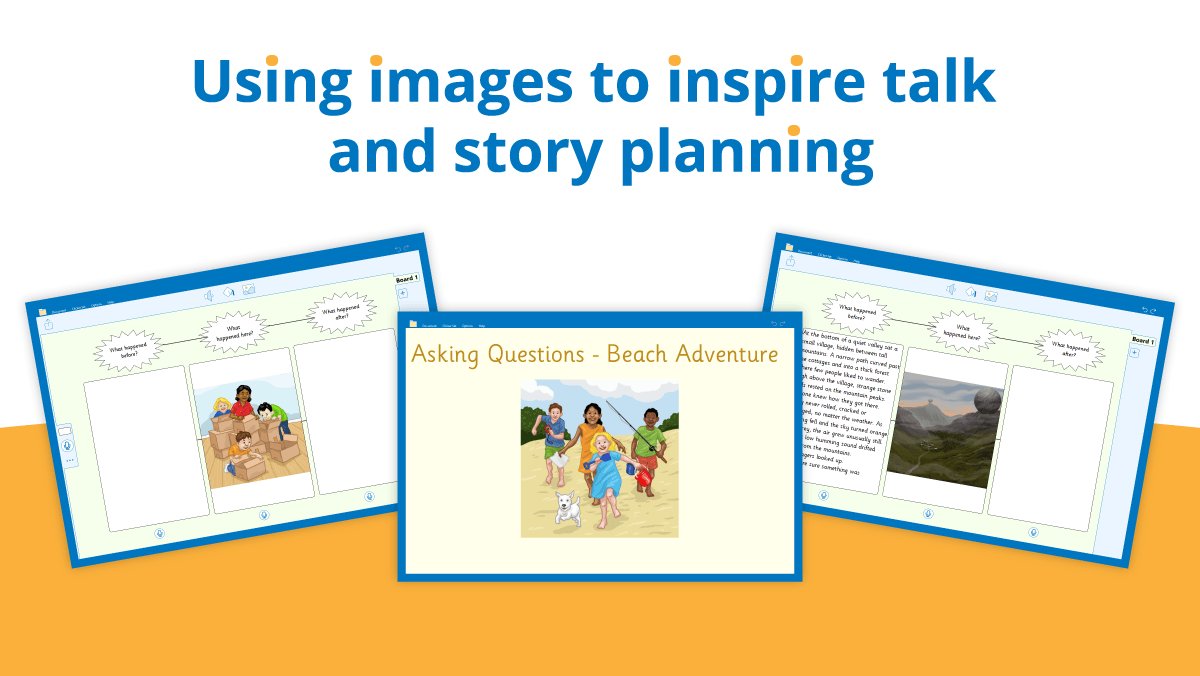
For example, teachers can use Clicker’s Sentence Sets and writing grids during whole-group phonics or comprehension lessons. These tools offer just enough structure to support struggling writers while still allowing independence and creativity.


This is what MTSS at Tier 1 is really about. It’s not “everyone gets the same.” It’s “everyone gets what they need in a shared learning space.”
Tier 2: Targeted intervention
Imagine this scene: a second-grade classroom where most students are progressing academically, but a few students still struggle with basic CVC (consonant-vowel-consonant) blending. The teacher has been covering more advanced vowel teams in whole-group phonics lessons because that’s what the pacing guide says.
Rather than rushing ahead, the teacher pivots. During Tier 2 small-group time, they use Clicker to target exactly what these students need: custom Word Banks for CVC practice, decodable texts, and short writing prompts that reinforce exactly those sounds.
Tier 3: Intensive intervention
When a student needs additional time for targeted intervention, Clicker meets the need. Educators can adapt Sentence Sets, sentence frames, add Voice Notes, simplify vocabulary, or build custom writing tasks that align with student needs.

Clicker allows educators to document, respond to, and build upon what students can do, right now, in real instructional time.
Data-informed, team-led instruction (not tracking)
MTSS uses multiple data points to help inform student academic deficiencies. Targeted intervention groups are then created based on the need to support academic progression within those identified deficiencies.
Groupings in an MTSS framework are meant to respond to current needs. As new data comes in, groups adjust. And when those groupings are driven by a collaborative team, not a single teacher working in isolation, they become a tool for equity, not exclusion.
Clicker makes it easier to act on those decisions. You can co-create writing supports, share templates across classrooms, and build continuity between classroom instruction and intervention services.
Final thought: MTSS only works when we use what we already have well
At the end of the day, you don’t need 27 new tools or to overhaul a curriculum to provide tiered support. All you need is a system that helps you make the most of the resources already at your fingertips. And a way of seeing frameworks for what they are: guidance to support decision-making.
Clicker bridges the gap between whole-group instruction and individualized supports. Between what your teachers are already doing, and what your students actually need. Between big-picture frameworks like MTSS, and the day-to-day work of small group lessons, targeted scaffolds, and differentiated writing tasks.
Across tiers, across classrooms, and across time, Clicker helps make MTSS real, practical, and sustainable.