How Clicker improved writing confidence and independence for Wisconsin students
We recently ran a 90-day Clicker pilot with Trevor-Wilmot Consolidated School District (Trevor, Wisconsin) which serves students from PK to 8th grade.
The pilot enabled the district to explore new ways of supporting students who had not yet reached their full potential with writing and communication.
Reducing reliance on adult support
A key motivation behind starting the pilot was to help students meet their IEP goals by working towards independence, rather than relying on the support of paraprofessionals.
These students required lots of support and prompting to write simple sentences. Staff also wanted to help them develop language skills such as accurate pronoun usage and writing with correct sentence structure.
Why Clicker?
Clicker supports students with many of the areas of writing that they would typically ask an adult to help with.
Intuitive tools including Clicker’s speech feedback, talking spell check, child-friendly Predictor, and supportive writing grids break down the cognitive load of writing, enabling students to focus on what they want to convey.
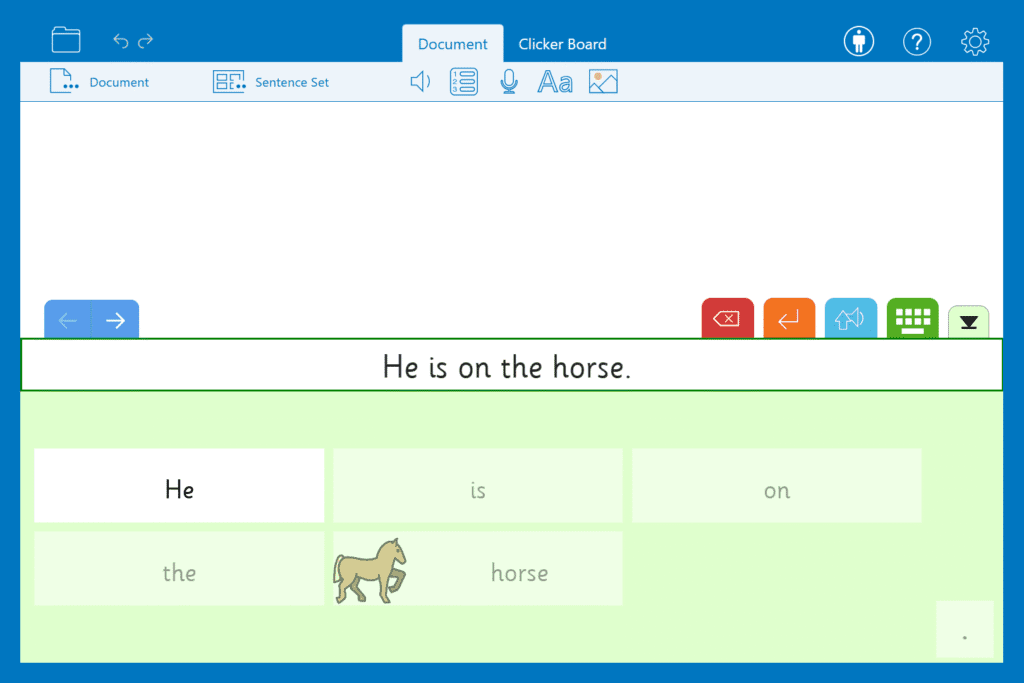
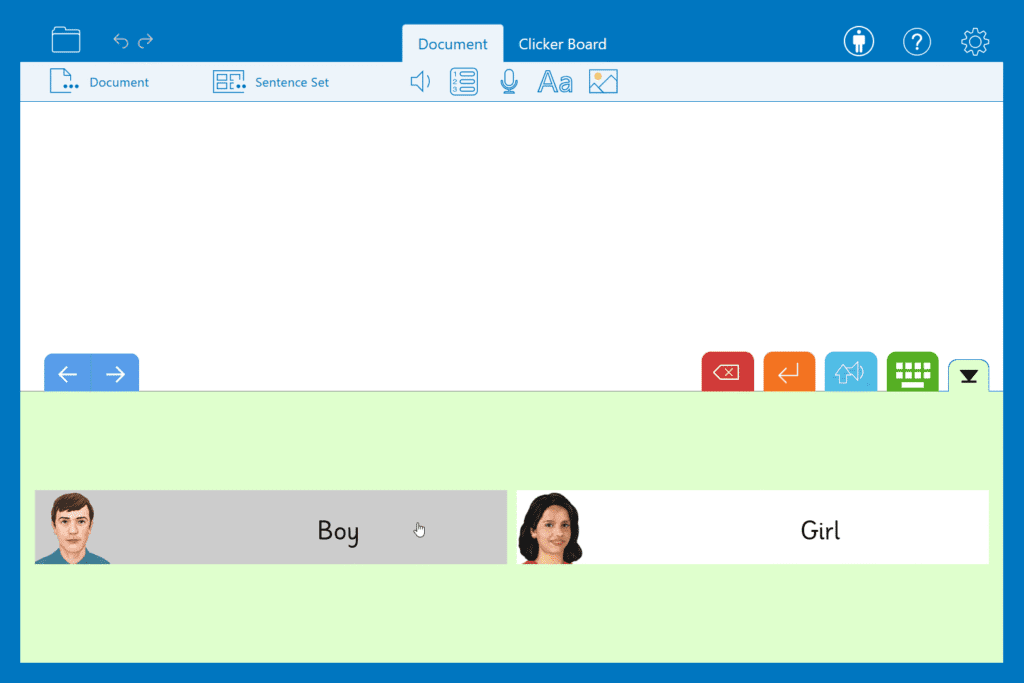
You can also use scaffolded resources on LearningGrids to target specific problem areas. For instance, Sentence Sets with guided order provided staff with ready-made activities focused on pronoun use.
Example of the pronoun lesson being supported in Clicker
Student success with Clicker
Clicker’s impact is clear when comparing students’ work before, during, and after the pilot.
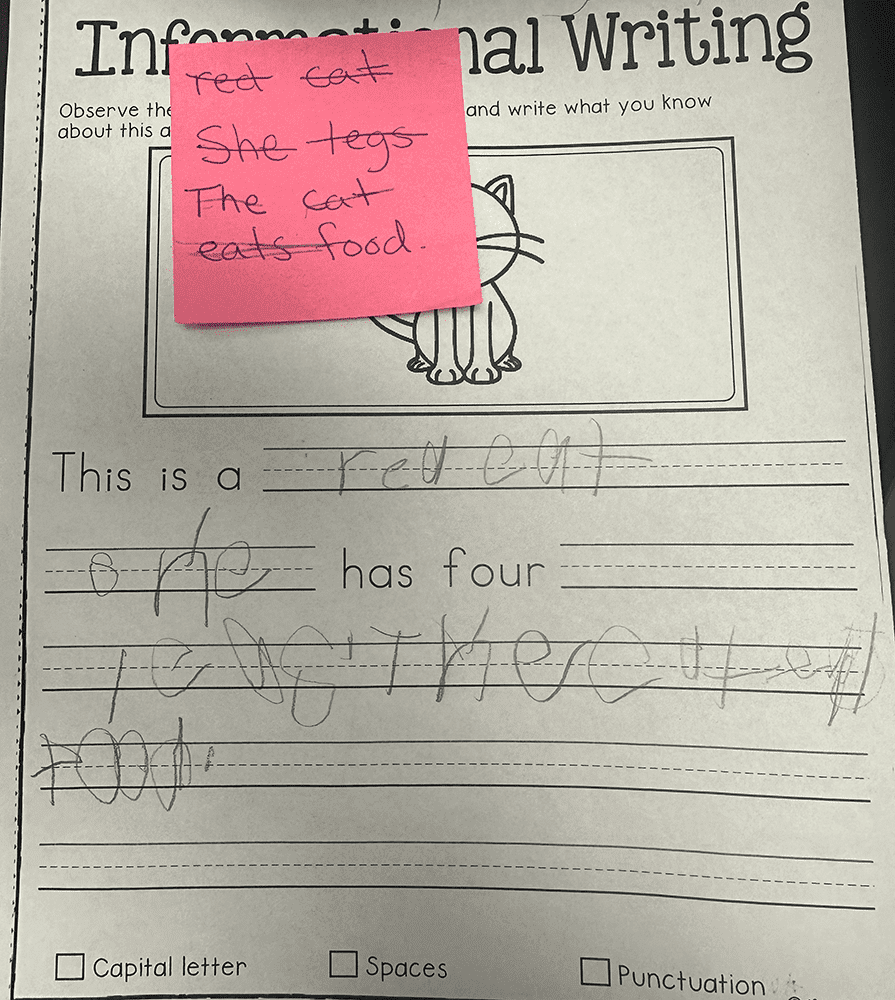
Before using Clicker, this student was being held back by handwriting difficulties. They needed lots of prompting to write simple sentences, and providing the words for students to copy was time consuming.
Once they started using Clicker, this student was finally able to show how much they could write. The example below is what their work looked like during the pilot, when the mechanics of writing no longer hindered them. They still had access to the scaffolds teachers knew they needed, but it was provided within Clicker. This allowed them to focus on the task at hand and saving hours of teacher time that would otherwise be spent on adapting different versions of paper resources.
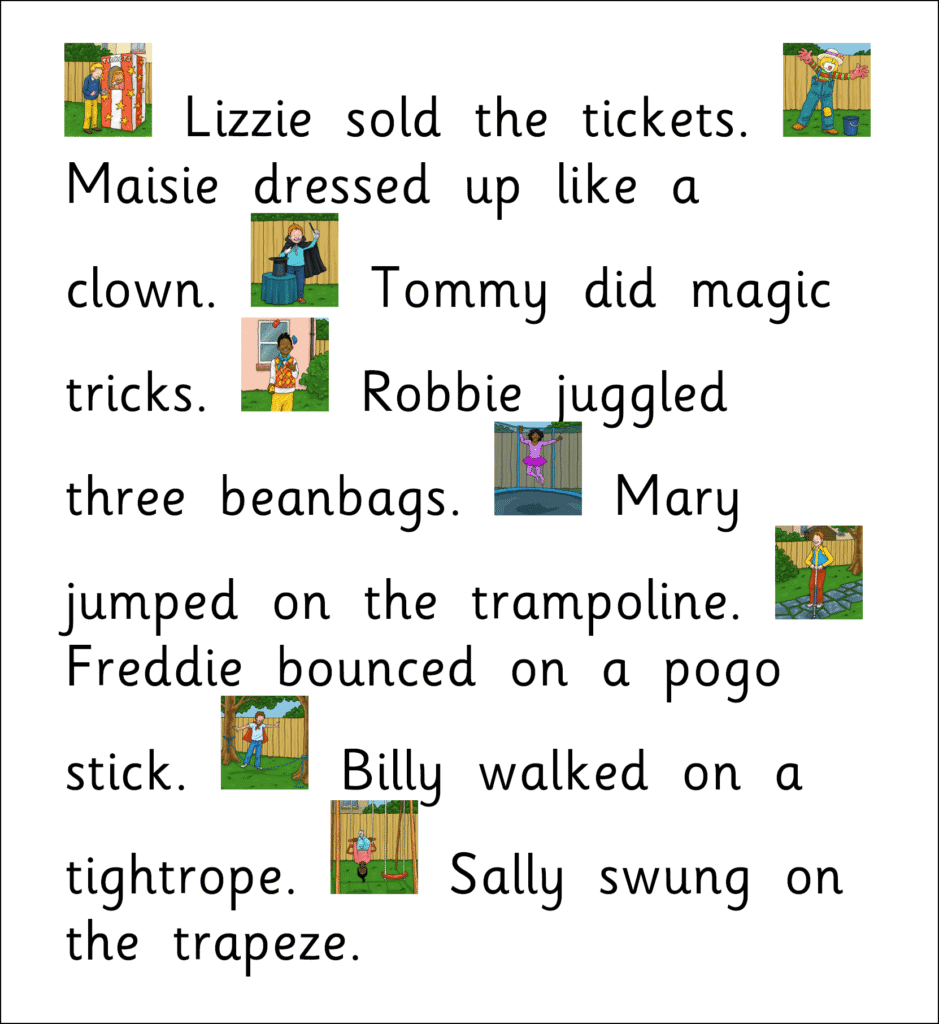
These improvements in writing continued after the pilot was over.
Another student could only get a small number of words on the page before Clicker. Their handwriting also made it difficult to assess their understanding.
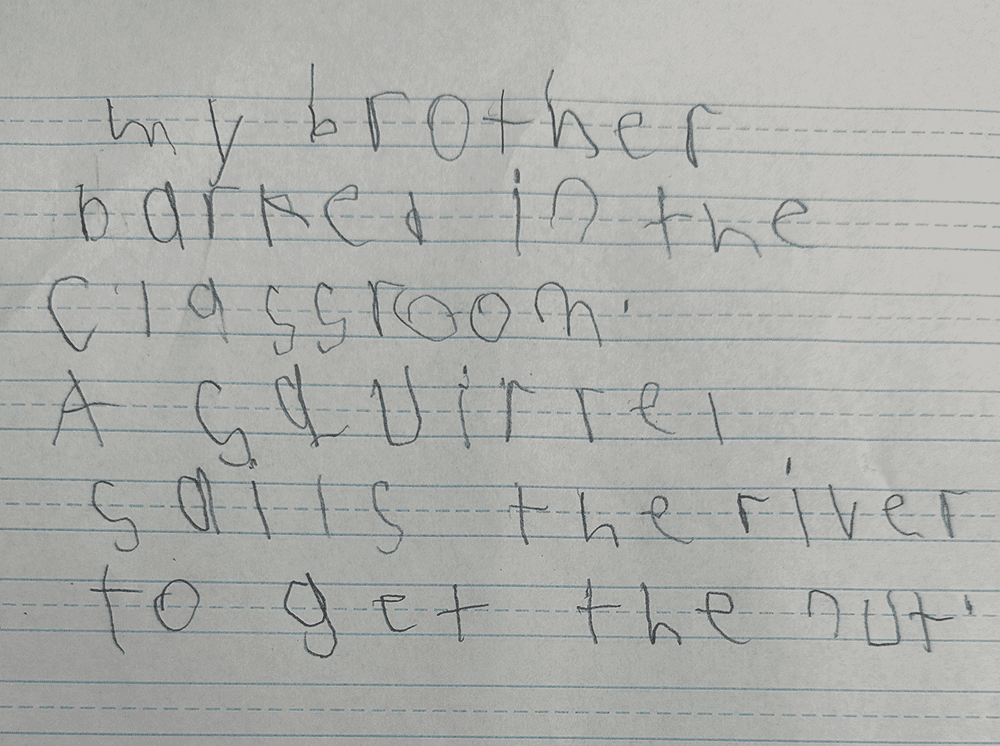
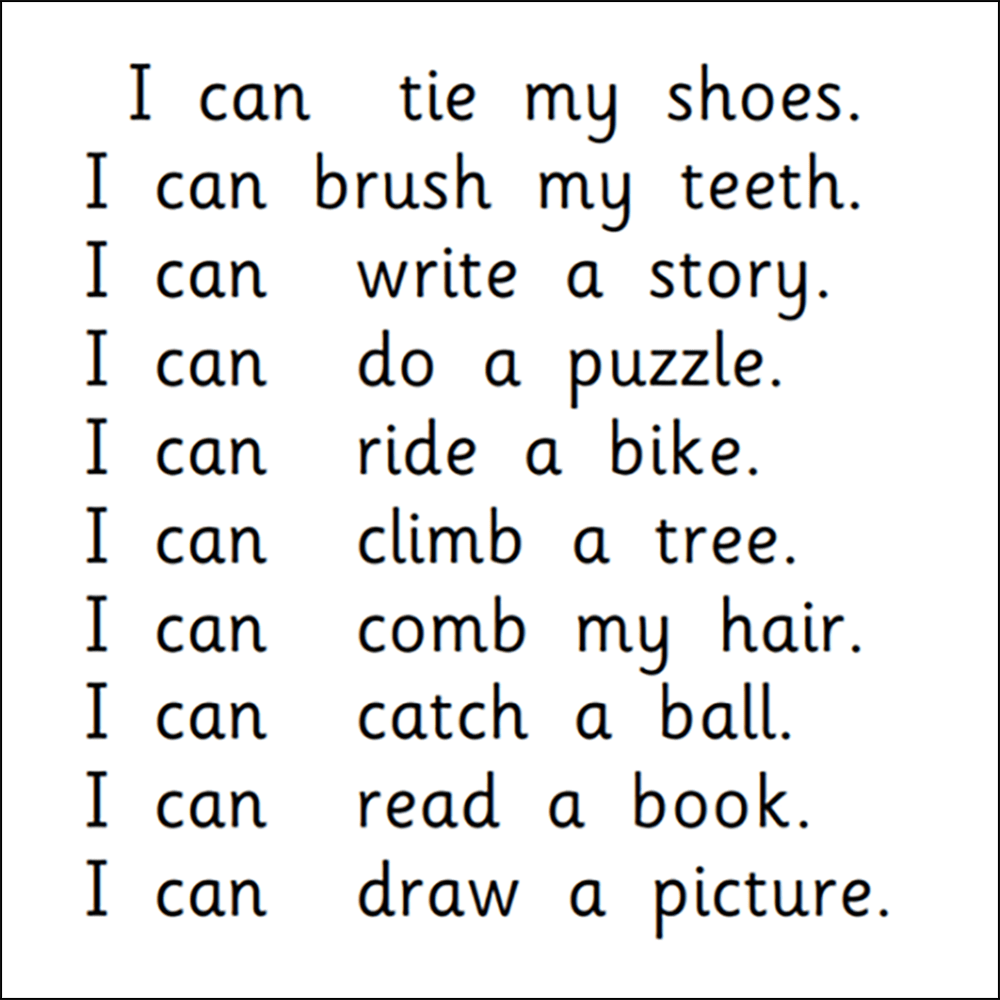
During the pilot, they were able to build up their confidence and independence during writing tasks. With that foundation, they went on to produce work that followed lesson objectives and demonstrated an understanding of language rules.
The results at scale: Improved writing, more independence, and increased confidence
“During our pilot with Clicker, I saw my students build confidence and independence with the writing process. I love how Clicker provides scaffolded support to reduce motor fatigue and cognitive overload, so students can focus on expressing their ideas to show us how creative and smart they are. Clicker improved our students' access to their education, and we saw excitement and task initiation for the first time during writing.”
- Leah Schibler OTR/L
Staff have seen accelerated progress in writing during their time with Clicker. Students are producing significantly more written material. Several students who previously struggled to write a single sentence are now able to compose full paragraphs!
They also noted an increase in overall enthusiasm for writing. Students recognize Clicker and are excited to use it, approaching writing tasks with more confidence and self-confidence.
In addition, teachers have been able to incorporate speech-language goals directly into Clicker activities.
With Clicker in place, students are strengthening academic and functional life skills side by side - and, just as importantly, discovering the confidence that comes from being able to communicate their ideas independently.
If you would like to learn how Clicker can have a similar impact across your school or district, you can schedule a free discovery call with our team.
