The science of reading and Clicker’s decodable books
As many schools revise their reading instruction to be more aligned with the science of reading, phonics has gained greater traction in early elementary classrooms. Decodable books have an important role to play in the teaching of phonics, and on LearningGrids we have recently published three CVC decodable Clicker Books.


What is the science of reading?
The science of reading is a collection of research from the past few decades that has explored effective strategies for teaching children to read. The strategies are especially important for struggling readers. The research provides a framework for evidence-based reading instruction and focuses on five main areas:
- Phonemic awareness
- Phonics
- Fluency
- Vocabulary
- Comprehension
Let’s have a closer look at phonics, in particular.
What is phonics?
Phonics involves matching the sounds (phonemes) of spoken English with the individual letters (graphemes) or groups of letters. Phonics instruction helps students increase their ability to sound out, or decode, new words.
How does phonics align with the science of reading?
One of the main findings from the science of reading is that there needs to be explicit and systematic instruction. For phonics, this means teachers usually follow a plan. This plan shows what sounds they teach and the order they teach them.
There isn’t an overarching scope and sequence that all schools use. However, most schools begin by teaching short vowel sounds. This means that CVC (consonant-vowel-consonant) words are usually among the first words children can read.

With explicit and systematic phonics instruction, students need to be given lots of ways to practice the new sounds and letters that they are taught. This is why decodable books are so important.
What are decodable books?
Decodable books are texts that focus on specific phonics patterns. The books give students the opportunity to use their segmenting and blending skills to decode words in context. It is important that students are offered decodable books based on what sound-spellings they have already been taught. The majority of the words in the text should be able to be sounded out based on the student’s phonic knowledge.
Clicker’s CVC decodable books
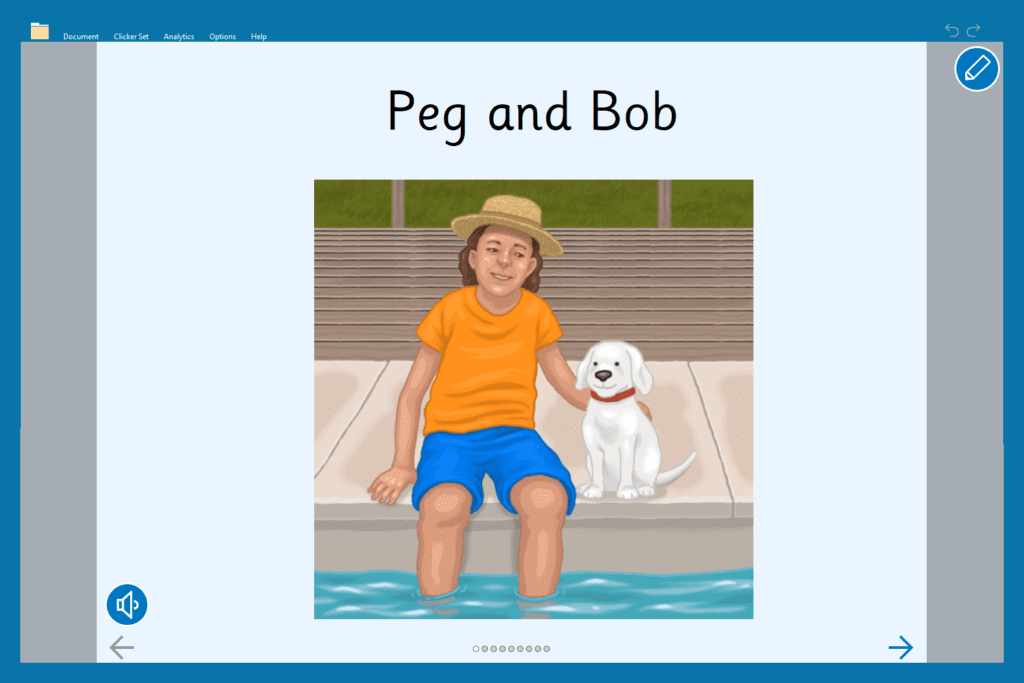
In the case of our new CVC decodable Clicker Books (Tig in Mud, Bug in a Bin, and Peg and Bob), we highlight in the notes exactly which sounds/letters each book focuses on. Almost all the words in the books are CVCs, but they do include a couple of high-frequency sight words, such as “the” and “is”.
We offer two versions of each book – a Read a Book and a Read It Yourself. Since many educators suggest getting a child to attempt to decode the text on their own first, you may want to use the Read It Yourself book. The only difference from the Read a Book version is that the speaker button has been removed – so that students can’t just listen to the book.
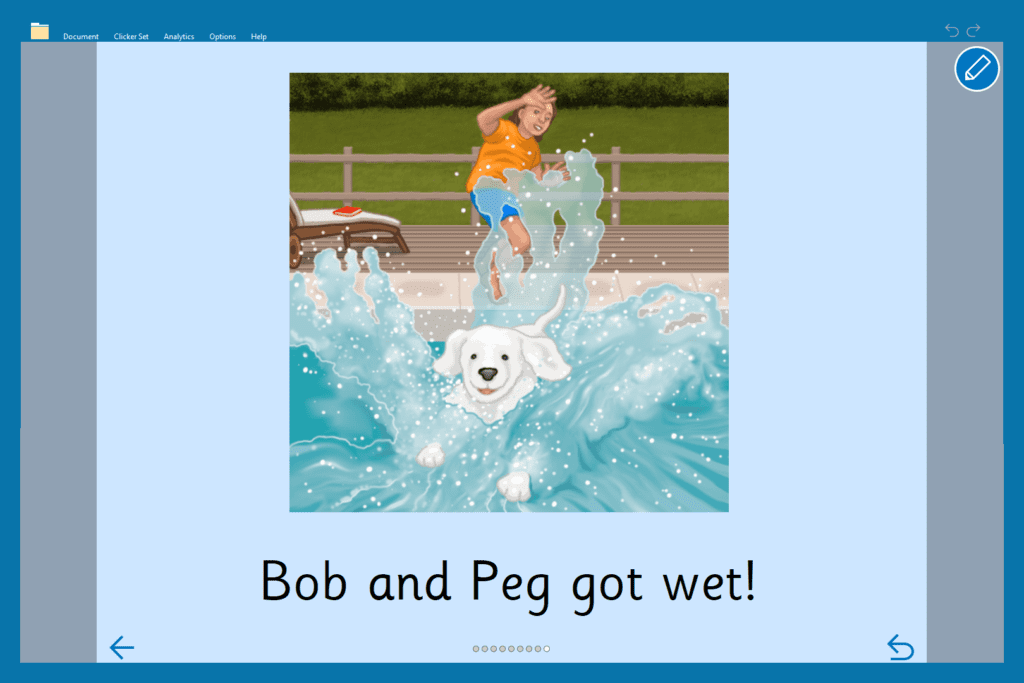

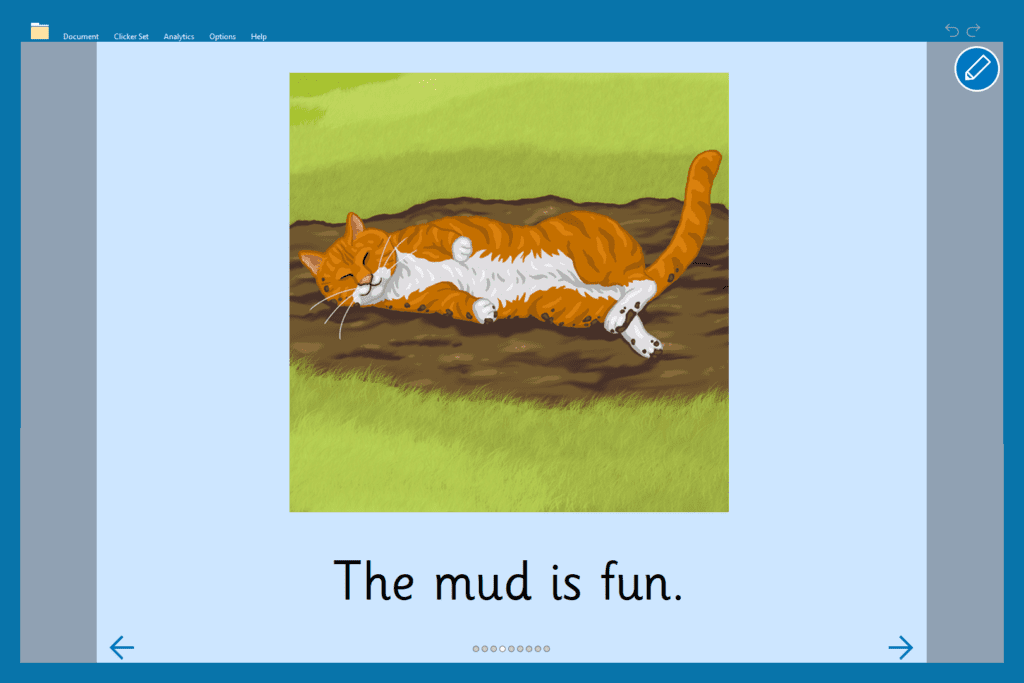
While the texts are simple, we have worked hard to create stories (and illustrations) that will catch the interest and imagination of young readers. Your students will have fun reading about the different characters: a mischievous dog, a mud-loving cat, and a large bug lurking in a toy bin!
In an upcoming blog post, I’ll explore the other Clicker activities that have been created to support these decodable Clicker Books. In the meantime, here are some other resources that you might find helpful:
